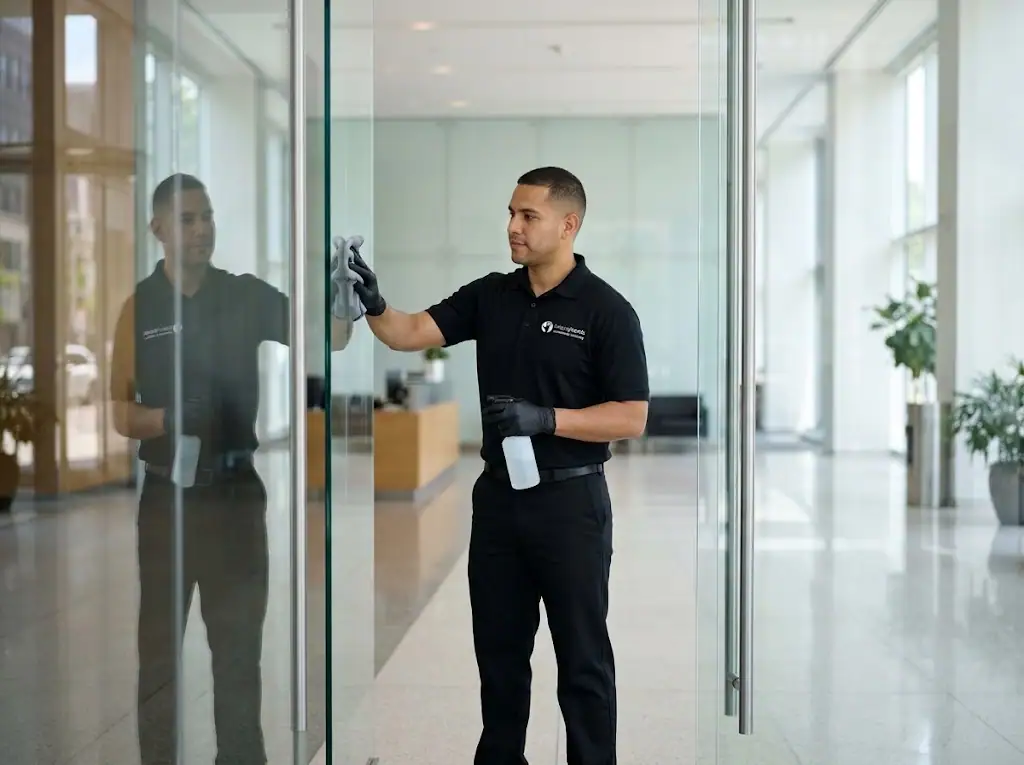
Winter commercial cleaning in Chicago means more than mopping up the entrance. When salt, slush, and wet foot traffic reach a large facility, they affect the lobby, the restrooms, the hallways, and everyone who uses them. According to the National Weather Service, Chicago’s first measurable snow arrives on average around November 18, and a typical winter brings about 38 inches. That gives facility managers a few weeks now to adjust their program before conditions change. Helping Hands Commercial Cleaning has served Chicagoland since 2001, and builds its winter adjustments into the recurring service a facility already has, so nothing depends on a one-time visit. Here is what a full winter program should cover.
Keep Your Facility Clean, Safe, and Inspection-Ready
Get professional cleaning services tailored to your building.
Why Winter Changes the Cleaning Equation for Large Facilities
In warmer months, foot traffic brings dust into a building. In winter, it brings salt, sand, and meltwater, and it brings them all day, not just at closing time. Salt dries into a white film on hard floors and glass, and left in carpet it acts as an abrasive that wears the fibers. Wet floors near entrances create slip hazards while people are still arriving, which a single after-hours cleaning pass cannot address.
That is why winter is the season where daytime coverage matters most. Our day porter services keep entrances, lobbies, and restrooms at standard while the building is in use, instead of leaving puddles and residue until the next scheduled visit. The safety side of this problem is covered in our guide to what OSHA-conscious industrial facilities should require from a cleaning vendor.
The Winter Readiness Checklist for Large Facilities
Facility managers can use these five points to check whether their current program is ready for the season. Our team builds them into commercial cleaning services in Chicago programs for large facilities across the region.
1. Entrance matting and walk-off zones
Large facilities need walk-off mats at every entry, sized to catch what people carry in. Confirm who supplies the mats, who cleans around and under them, and how often they are swapped during heavy weather.
2. Daytime coverage on storm days
A day porter on site during operating hours can wipe up meltwater, reset wet-floor signage, and empty saturated mats as conditions change. This is the piece most facilities are missing, because a nightly-only contract sees the problem after the day’s damage is done.
3. Restrooms and breakrooms
People stay indoors longer in winter and arrive in wet boots and heavy coats. Restrooms and breakrooms take more use per day, so their frequency and restocking need a second look before the first storm, not after complaints start.
4. Glass, handles, and high-touch surfaces
Salt film and fingerprints show up fastest on glass doors, push plates, and handles. These are also the surfaces most people touch on the way in, so they set the first impression of the whole building.
5. Coordination with exterior snow removal
Snow and ice removal outside the building is typically handled by a separate contractor. Agree in advance on who covers what, because the better the exterior treatment, the less salt and slush the interior program has to handle.
What to Ask Your Cleaning Vendor Before the First Snow
A short conversation in October can prevent most winter problems. Ask your current vendor, or any vendor you are evaluating, these questions:
Is there daytime coverage on storm days, or only an after-hours visit? A crew that arrives once the building empties cannot keep entrances safe while people are walking through them.
How does the program change between November and March? A vendor with a real winter plan can tell you what gets added, at which entrances, and how often.
Who cleans the mats, and who cleans under them? Salt collects where mats end, and it is often the area no contract clearly assigns to anyone.
Will the same team be on site every day? Consistency matters most when conditions change quickly, because a familiar crew spots problems early.
What happens when a big storm hits mid-week? Ask how the vendor adds coverage on short notice, and who you call when you need it.
Is there daytime coverage on storm days, or only an after-hours visit? A crew that arrives once the building empties cannot keep entrances safe while people are walking through them.
How does the program change between November and March? A vendor with a real winter plan can tell you what gets added, at which entrances, and how often.
Who cleans the mats, and who cleans under them? Salt collects where mats end, and it is often the area no contract clearly assigns to anyone.
Will the same team be on site every day? Consistency matters most when conditions change quickly, because a familiar crew spots problems early.
What happens when a big storm hits mid-week? Ask how the vendor adds coverage on short notice, and who you call when you need it.
If the answers are vague, that is a sign the winter program is really the summer program with no changes. For a large facility with hundreds of people entering each day, that gap shows up quickly in slippery lobbies, salt-stained floors, and complaints from tenants and staff.
Why a Direct-Hire, Recurring Program Handles Winter Better
A winter program only works if the same people show up every day and know the building. Helping Hands Commercial Cleaning employs 100% W-2 trained, bonded, and insured staff, never subcontractors, so the crew that learns your entrances in October is the crew handling them in January. Recurring 5 to 7 day maintenance programs, dedicated account management, and regular quality control inspections keep the standard steady through the months when it is hardest to hold.
Get Your Facility Ready Before the First Snow
Adjusting a cleaning program takes a walkthrough and a few weeks of lead time, and both are easier to schedule in October than in the middle of a storm week. Helping Hands Commercial Cleaning serves DuPage, Cook, Kane, Will, and Lake Counties.
To review your facility’s winter needs, request a customized commercial cleaning quote or call (630) 530-8121.
Written by Gosia Baran, Founder of Helping Hands Commercial Cleaning.