Apartment porter services in Chicago keep the shared spaces of a building clean while residents and tenants are using them: lobbies, elevators, trash rooms, mailrooms, amenity spaces, and common hallways. Helping Hands Commercial Cleaning provides porter services for apartment, multi-tenant office, and mixed-use buildings across Chicago and the suburbs from its office in Elmhurst, Illinois, with more than 120 trained, background-checked W-2 employees and documented weekly supervisor inspections.
Keep Your Facility Clean, Safe, and Inspection-Ready
Get professional cleaning services tailored to your building.
This guide explains what a building porter does, which areas a porter program should cover, why winter changes the plan, and how to size porter hours for your property.
Key Takeaways
- Porter services cover common areas during the day, while nightly janitorial crews do the deeper cleaning after hours.
- A building porter focuses on lobbies, entrances, elevators, trash rooms, mailrooms, amenity spaces, restrooms, and hallways.
- From November through March, salt and slush make daytime porter coverage the most visible part of a cleaning program.
- Porter hours depend on units or tenants, foot traffic, amenities, and the building’s schedule. A walkthrough sets the right plan.
What Does a Porter Do in an Apartment or Multi-Tenant Building?
A porter keeps common areas clean and presentable during the hours people are in the building. In an apartment building, that means the lobby, elevators, mailroom, and trash rooms stay in order for residents and guests. In a multi-tenant office building, it means shared restrooms, entrances, and corridors stay ready for tenants and their visitors.
How Is a Porter Different from Nightly Janitorial?
Nightly janitorial crews reset the building after hours: restrooms, floors, and detailed cleaning when traffic is low. A janitorial porter works during the day and responds to what happens in real time, such as a spill in the lobby, an overflowing trash room, or tracked-in salt by the elevators. Most Chicago buildings get the best results by pairing the two. For a side-by-side view, see our comparison of day porter vs. janitorial services.
Who Needs Day Porter Services?
Day porter services make the most sense for buildings with heavy lobby traffic, shared amenities, or many tenants using the same spaces: apartment buildings, condominium common areas, mixed-use properties, and multi-tenant office buildings. Property managers who field frequent complaints about common areas between cleanings are usually the first to add a porter.
Areas a Building Porter Covers
A porter program should be written by area, so everyone knows what is covered and how often. Helping Hands Commercial Cleaning builds porter services around the spaces residents and tenants judge first. Porter work covers common areas only; it does not include cleaning inside apartments or tenant suites.
Lobbies, Entrances, and Elevators
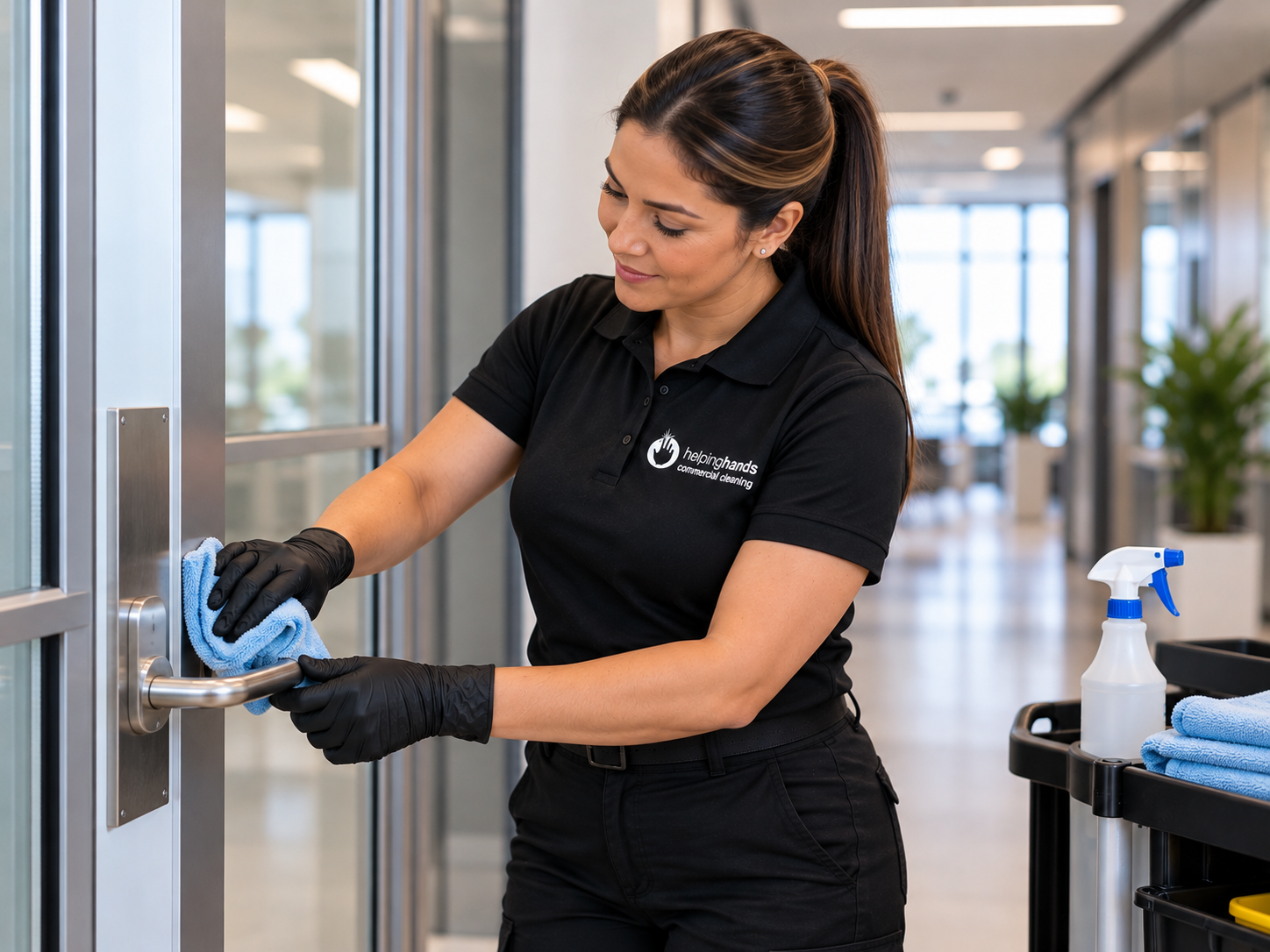
- Entry glass, doors, and handles
- Lobby floors, mats, and seating areas
- Elevator cabs, buttons, and high-touch surfaces
Trash Rooms, Recycling, and Loading Areas
- Trash and recycling rooms kept clean and odor-controlled
- Spills and overflow handled during the day
- Loading and delivery areas kept clear and presentable
Amenity Spaces and Mailrooms
- Fitness rooms, lounges, and shared kitchens
- Package and mailrooms, which get busier during the holidays
- Rooftops and outdoor common areas in season
Restrooms and Common Hallways
- Shared restroom checks and restocking
- Hallway and stairwell spot cleaning
- High-touch surface wipe-downs
Not sure what your building needs? Schedule a free walkthrough and Helping Hands Commercial Cleaning will map porter coverage area by area.
Winter Is When Porter Coverage Shows
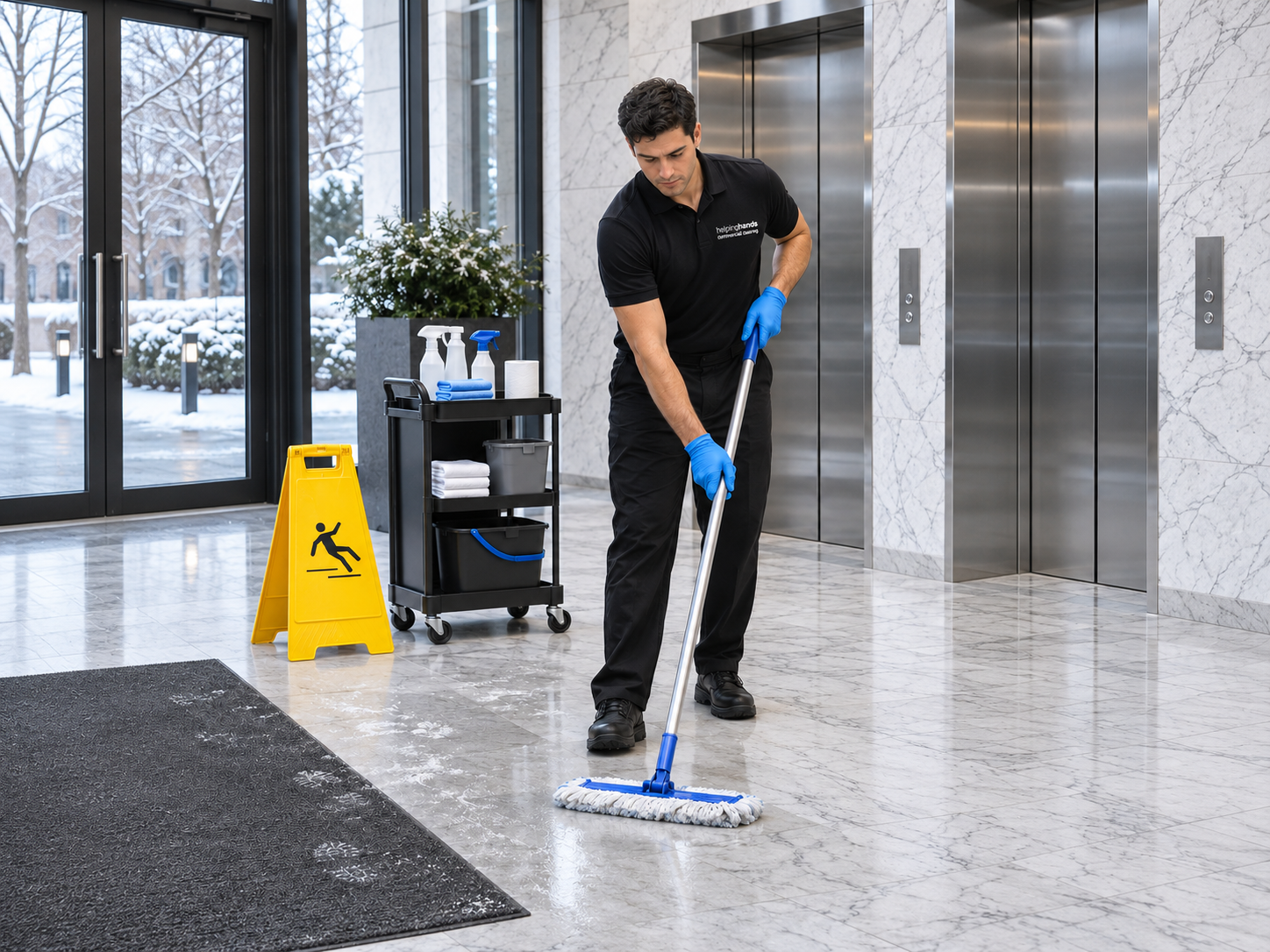
Chicago winters bring salt, slush, and moisture into lobbies, elevators, and hallways every day from November through March. A nightly crew can clean the floors once, but by mid-morning the entrance looks the same again. Daytime porter coverage is what keeps a building presentable during the months when residents and tenants notice it most.
- Reset and replace entrance mats through the day
- Remove salt residue from hard floors and elevator cabs
- Keep wet areas marked and dry to reduce slip risk
- Check mailrooms and lobbies more often during holiday deliveries
For a full checklist, read our guide to winter readiness for large facilities.
How Many Porter Hours Does Your Building Need?
There is no single number. A 40-unit courtyard building and a high-rise with a fitness center and package room need very different coverage, even in the same neighborhood. These factors drive the plan:
| Factor | What it changes |
|---|---|
| Units or tenants | How often common areas and trash rooms need attention |
| Foot traffic | How many lobby, entrance, and elevator checks per shift |
| Amenities | Extra time for fitness rooms, lounges, and mailrooms |
| Schedule | Morning, midday, evening, or weekend coverage |
| Season | More entrance and floor care from November through March |
Helping Hands Commercial Cleaning focuses on recurring programs of three to five service days per week, often a day porter combined with nightly janitorial. The on-site walkthrough sets the hours and the schedule.
Porter Services and Tenant Retention
Residents and tenants form their opinion of a building in the lobby, the elevator, and the trash room. When those spaces are clean every time, there are fewer complaints for the property team to handle and fewer reasons for tenants to look elsewhere at renewal. A consistent porter, who knows the building and its residents, also spots problems early and reports them before they become work orders.
Porter coverage works best as part of a full multi-tenant building cleaning program. Learn more about how nightly janitorial services support tenant retention in Chicago-area buildings.
Why Chicago Property Managers Work with Helping Hands Commercial Cleaning
Helping Hands Commercial Cleaning has served Chicagoland since 2001 and is based in Elmhurst, Illinois. Property managers choose the company for consistent staff and clear accountability.
- Direct-hire W-2 staff: more than 120 trained, background-checked employees, never subcontractors.
- Documented weekly supervisor inspections: results the property team can review, not verbal updates.
- GBAC STAR Facility accreditation: recognized training and protocols for infection prevention.
- Industry memberships: ISSA member and BSCAI verified member, plus a partner of Cleaning for a Reason.
- Local presence: member of the Elmhurst Chamber of Commerce & Industry, Chamber630, the Bolingbrook Area Chamber of Commerce, and the GOA Regional Business Association.
- Fast proposals: a customized cleaning plan within 24 hours of your request.
Helping Hands Commercial Cleaning serves Chicago and Cook, DuPage, Kane, Will, and Lake counties.
Request a Porter Services Quote in Chicago
Ready to see what porter coverage would look like in your building? Request a free, no-obligation walkthrough or call (630) 530-8121. Helping Hands Commercial Cleaning will review your common areas, traffic, and schedule, and send a customized porter plan within 24 hours.
Conclusion
Property managers searching for apartment porter services in Chicago are really asking one question: who will keep lobbies, elevators, trash rooms, mailrooms, and hallways looking their best every day residents and tenants are on site. A day porter handles that real-time upkeep, while nightly janitorial delivers the deeper, after-hours reset, and pairing the two is what most Chicago buildings rely on for consistent common areas. Winter adds its own demands, with salt and slush making daytime coverage the most visible part of the program from November through March, and the right porter hours always come down to unit or tenant count, foot traffic, amenities, and schedule rather than a fixed number. Helping Hands Commercial Cleaning sizes that plan through an on-site walkthrough, so a quick conversation about your building’s common areas is the natural next step toward reliable, year-round coverage.
FAQ
What do porter services include for apartment buildings?
Porter services for apartment buildings include lobby and entrance upkeep, elevator cleaning, trash and recycling room care, mailroom and amenity space upkeep, and common-area restroom and hallway checks during the day.
What is the difference between a porter and a janitor?
A porter keeps common areas clean during the hours residents and tenants are in the building. A janitor does scheduled, more detailed cleaning, usually after hours.
Do multi-tenant office buildings need porter services?
Multi-tenant office buildings with busy lobbies, shared restrooms, or amenity spaces usually benefit from day porter services, because those areas get dirty again between nightly cleanings.
Can porter services be combined with nightly janitorial?
Yes. Many Chicago buildings pair a day porter with a nightly janitorial program so common areas stay clean during the day and get a full reset at night.
Are Helping Hands Commercial Cleaning porters employees or subcontractors?
Every Helping Hands Commercial Cleaning porter is a trained, background-checked W-2 employee. The company never uses subcontractors.
How do I get a porter services quote in Chicago?
Request a free walkthrough online or call (630) 530-8121. Helping Hands Commercial Cleaning sends a customized plan within 24 hours.