
Why Chicagoland Schools Need Professional Cleaning Programs
What janitorial standards should schools and educational facilities in Chicagoland have in place before the start of the school year? Schools and educational facilities in Chicagoland should have a fully operational janitorial program in place before the first day of classes, covering classroom sanitation, restroom and breakroom service, gymnasium and cafeteria cleaning, and high-touch surface disinfection across all student-facing areas. Facilities that wait until classes begin to evaluate or switch their cleaning vendor face the first weeks of school in substandard conditions that affect student health, staff morale, and parent perception from day one.
Keep Your Facility Clean, Safe, and Inspection-Ready
Get professional cleaning services tailored to your building.
Why August Is the Most Important Month for School Facility Cleaning Decisions
The weeks before the school year begins are the highest-leverage window in the calendar for educational facility managers and school business administrators. Classrooms sit empty, gyms are available for deep surface work, restrooms can be fully serviced without student traffic, and the entire building is accessible for a proper cleaning program to be established before hundreds or thousands of students walk through the doors.
Facilities that use this window effectively arrive at the first day of school with clean, sanitized, inspection-ready buildings. Facilities that defer the decision until September are already behind, managing a cleaning program that is catching up to student traffic rather than staying ahead of it.
For school districts and educational institutions across Chicagoland, including DuPage County, Kane County, and Cook County, August is the month to have the right janitorial vendor in place, not the month to be evaluating options.
What Educational Facilities in Chicagoland Actually Require from a Janitorial Program
Educational facilities present a combination of cleaning challenges that standard commercial programs are not designed to address. The scale of the environment, the vulnerability of the population being served, and the regulatory expectations that govern school facilities all require a program built specifically for the educational context.
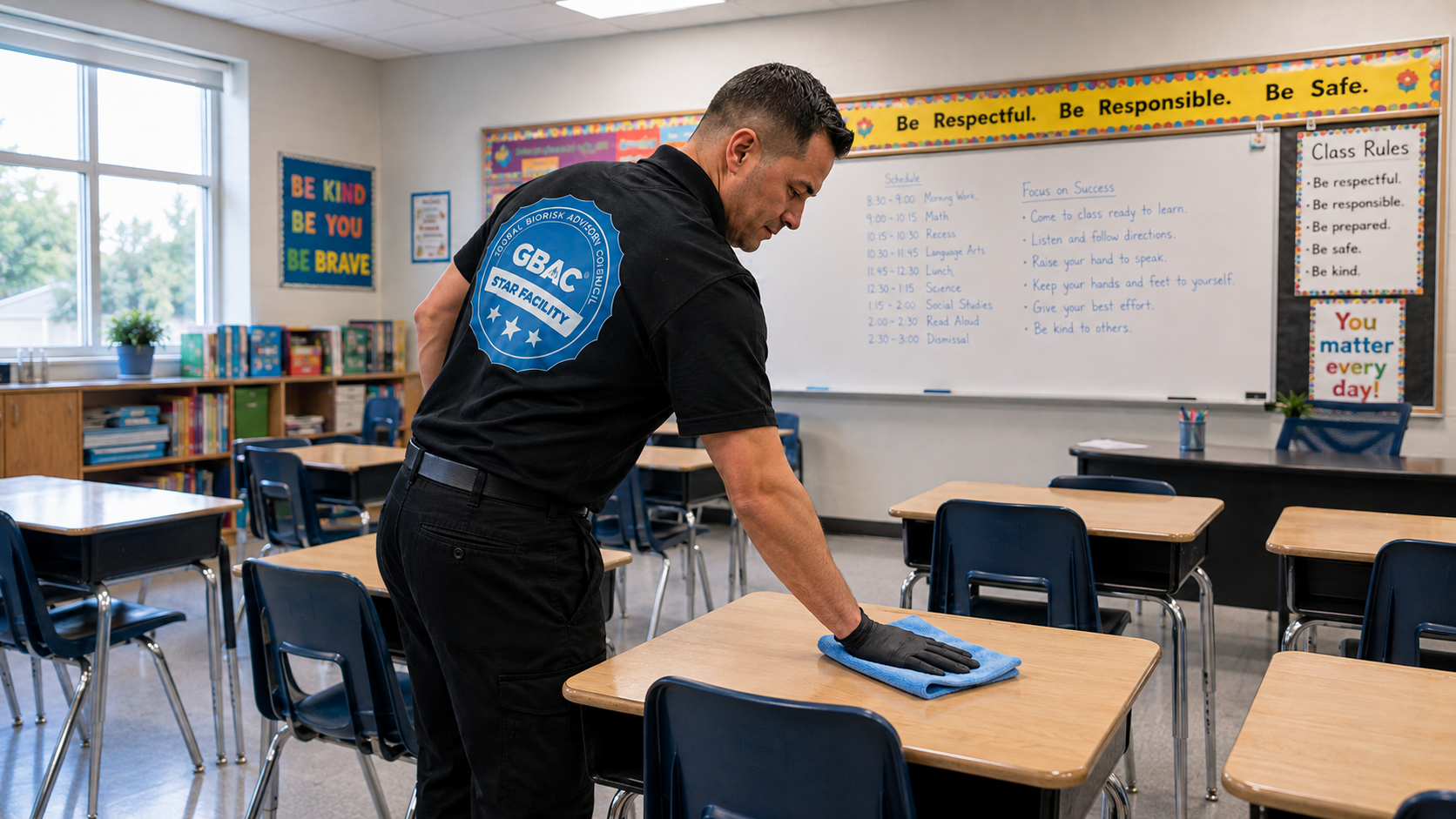
Classrooms require daily surface sanitation covering desks, chairs, doorknobs, light switches, and shared equipment. In environments where students are in close contact for six or more hours per day, high-touch surface disinfection is not optional. It is the primary mechanism for controlling the spread of illness across the student population.
Restrooms in educational facilities serve large numbers of students in compressed time windows, generating usage rates that far exceed a standard commercial office building. Service frequency and supply restocking schedules have to reflect that reality, not a generic commercial assumption.
Gymnasiums, cafeterias, and common areas require cleaning protocols calibrated to the activities that occur in each space. A cafeteria serving hundreds of students daily has different sanitation requirements than a corporate breakroom. A gymnasium floor used for athletics requires different maintenance than a standard commercial floor. A janitorial program that applies the same approach across all zones is not serving the facility correctly.
GBAC Certification and Why It Matters for Schools
Schools serving student populations have a heightened obligation to maintain infection-control standards that go beyond surface appearance. GBAC certification represents the cleaning industry’s highest standard for biosafety and infection-control protocols, and it is the clearest signal available to school administrators, parents, and board members that the janitorial program is built on verified science rather than assumptions.
For school business managers presenting janitorial vendor decisions to a board of education, GBAC certification is documentation that the program meets a recognized external standard. That documentation matters during budget reviews, parent concerns about illness outbreaks, and any public scrutiny of how the district manages its facilities.
Educational institutions in DuPage County, Kane County, and Cook County that require GBAC-certified cleaning programs are not setting a higher bar than necessary. They are setting the bar that the population they serve actually requires.
Why Direct-Hire Employees Are Non-Negotiable in Educational Settings
Schools and educational facilities cannot accept unknown personnel in their buildings. The safety of students and staff depends on the ability of the school administration to verify who is cleaning the facility, when they are there, and what their background check reveals.
Subcontractor-based cleaning models place unvetted personnel in school buildings without the direct employment relationship that makes verification possible. When a subcontractor crew rotates, the school has no visibility into who replaced the previous crew or what their background check status is.
Direct-hire cleaning employees are background-checked before their first day, employed directly by the janitorial company responsible for the account, and accountable to a local management team with a named point of contact. For school administrators in Chicagoland who are responsible for the safety of the students and staff in their buildings, this is not a secondary consideration. It is the baseline qualification for any cleaning vendor operating in an educational facility.
The Inspection and Documentation Standard Educational Facilities Need
School districts and educational institutions that operate under public accountability have an obligation to document the condition of their facilities. A janitorial program without weekly inspection reports and photo documentation cannot demonstrate compliance when a school board member, a parent organization, or a regulatory body asks for evidence of service quality.
Weekly supervisor inspections with photo documentation create a verifiable record of the facility’s condition over time. That record protects the school business manager when questions arise, provides a performance baseline for conversations with the janitorial vendor, and gives school administration visibility into the condition of the building on a continuous basis.
Educational facilities in Chicagoland that hold their janitorial vendor to a documented inspection standard arrive at every board meeting, every parent inquiry, and every regulatory review with evidence on file. Facilities that rely on verbal assurances do not.
What a Back to School Cleaning Program Looks Like in Practice
A properly scoped janitorial program for a school or educational facility in Chicagoland before the start of the school year typically includes a full building walkthrough to assess classroom count, restroom capacity, gymnasium and cafeteria scope, and any specialized areas requiring specific protocols. From that walkthrough comes a cleaning schedule built around the academic calendar, bell schedule, and any after-hours programming that affects access windows.
Service frequency for active school facilities is a minimum of five days per week during the academic year, with high-touch surface disinfection occurring daily across all student-facing areas. Restroom service is calibrated to student population and usage patterns. Gymnasium and cafeteria programs are scoped separately to reflect the distinct demands of each space.
The program is established before the first day of classes so that the janitorial crew knows the building, the schedule, and the expectations before student traffic begins. A cleaning vendor that starts a school account on the first day of school is learning the building at the same time the students are arriving. That is not a program. That is an improvisation.
Helping Hands Commercial Cleaning: Serving Educational Facilities Across Chicagoland Since 2001
Helping Hands Commercial Cleaning is a woman-owned commercial janitorial company headquartered in Elmhurst, Illinois, serving DuPage, Cook, Kane, Will, and Lake Counties since 2001. The company employs direct-hire employees exclusively, holds GBAC certification for infection-control protocols, and conducts weekly supervisor inspections with photo documentation on every account.
For schools, community colleges, and educational facilities across Chicagoland preparing for the new school year, Helping Hands offers on-site walkthroughs to assess the specific cleaning scope, schedule requirements, and compliance standards of each facility before building a program.
To schedule a walkthrough before the school year begins, contact Helping Hands Commercial Cleaning at Call (630) 530-8121.
Conclusion
For Chicago-area school districts and educational facilities, the standard for a back-to-school janitorial program is clear: GBAC-certified infection-control protocols, direct-hire cleaning employees with verified background checks, weekly supervisor inspections with photo documentation, and a service schedule built around the academic calendar and daily student traffic. Together, these elements form a program that keeps classrooms, restrooms, gymnasiums, and cafeterias sanitized and inspection-ready from the first day of classes rather than catching up to it. Facilities that put this program in place in August, while buildings are still empty, avoid the substandard conditions that erode student health, staff morale, and parent confidence in the opening weeks of school. Scheduling an on-site walkthrough before the new school year begins is the most direct way for administrators to confirm their facility is covered by this standard.