Medical Office Janitorial Services in Chicagoland: Ensuring Reliable Healthcare Facility Cleaning
By Gosia Baran, Helping Hands Commercial Cleaning
Keep Your Facility Clean, Safe, and Inspection-Ready
Get professional cleaning services tailored to your building.
Maintaining a clean, sanitized medical office is essential for patient safety and public health. This guide summarizes the standards, infection-control procedures, certifications, and services provided by Helping Hands Commercial Cleaning to support safe, efficient clinical operations across Chicagoland.
Key Takeaways
- Chicagoland medical janitorial services follow CDC guidance for healthcare cleaning.
- Hospital-grade disinfectants are required to manage pathogens effectively.
- Protocols use color-coded tools and targeted high-touch disinfection to avoid cross-contamination.
- Certifications such as GBAC STAR and membership in ISSA/BSCAI indicate compliance and quality.
- Helping Hands offers trained, background-checked staff and inspection-driven quality assurance.
- Healthcare janitorial programs provide flexible scheduling and healthcare-compliant protocols.
- Routine inspections and same-day communication reinforce accountability and client satisfaction.
- Helping Hands serves multiple Chicagoland counties with localized service options.
- Facility managers should prioritize experience, quality assurance, and regulatory compliance when choosing a provider.
What Are the Essential Healthcare Cleaning Standards for Medical Offices in Chicago?
Core standards protect patients and staff: follow CDC guidance, use hospital-grade disinfectants, and ensure staff training on infection-control and privacy practices (including HIPAA awareness).
| Standard | Description | Importance |
|---|---|---|
| CDC Guidelines | Protocols for cleaning and disinfecting clinical areas | Aligns practices with national health guidance |
| Hospital-Grade Disinfectants | Products formulated to eliminate common healthcare pathogens | Central to infection-control effectiveness |
| HIPAA Training | Staff education on patient privacy and data handling | Protects confidentiality and compliance |
Applying these standards reduces infection risk and reinforces provider credibility.
How Do Infection Control Protocols Protect Patients and Staff?
Infection-control protocols combine appropriate disinfectants, clear procedures, and staff training to limit disease transmission in healthcare settings.
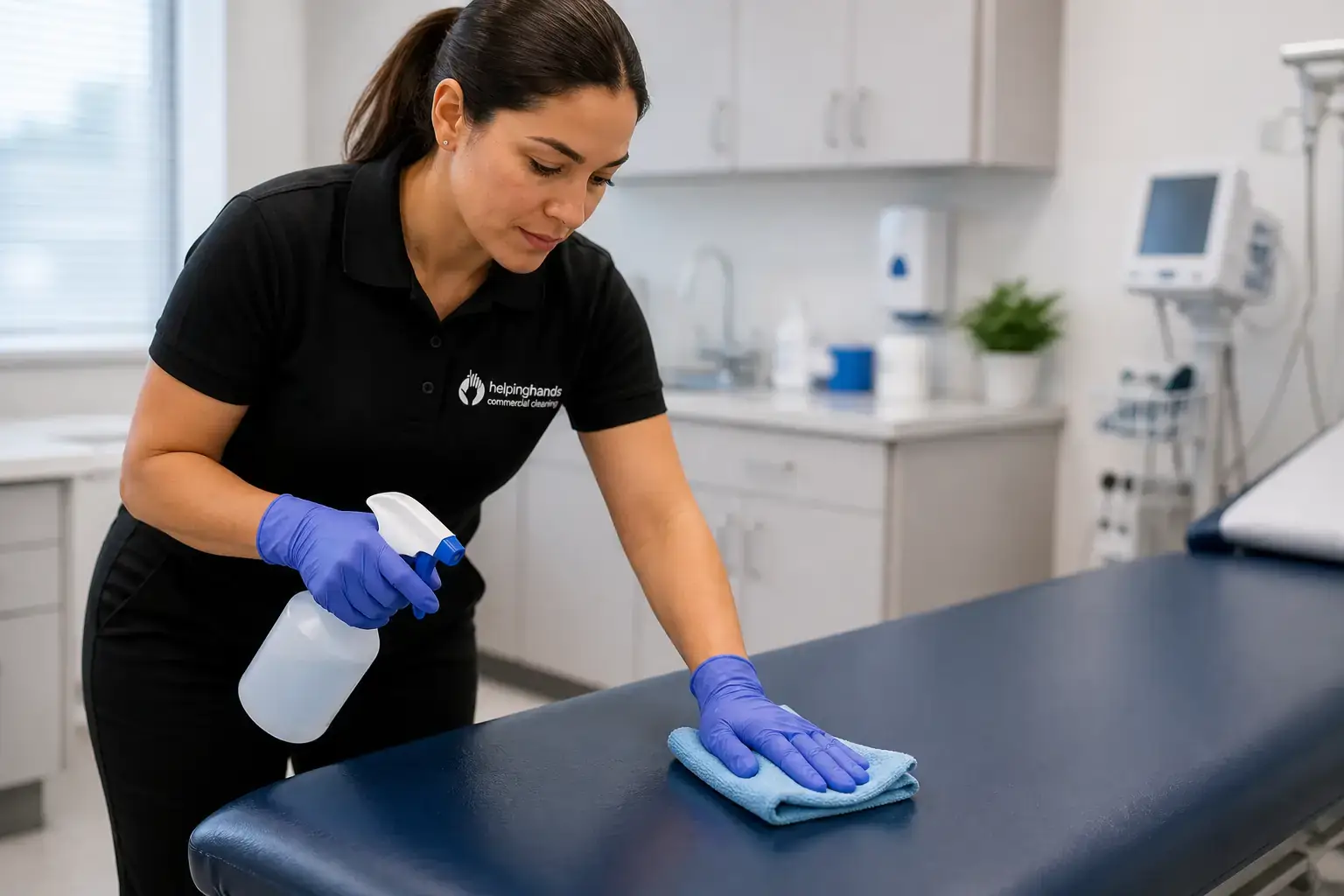
- Hospital-Grade Disinfectants : Use EPA-registered, hospital-grade products to kill relevant pathogens.
- Color-Coded Cleaning Systems : Assign tools by area to prevent cross-contamination.
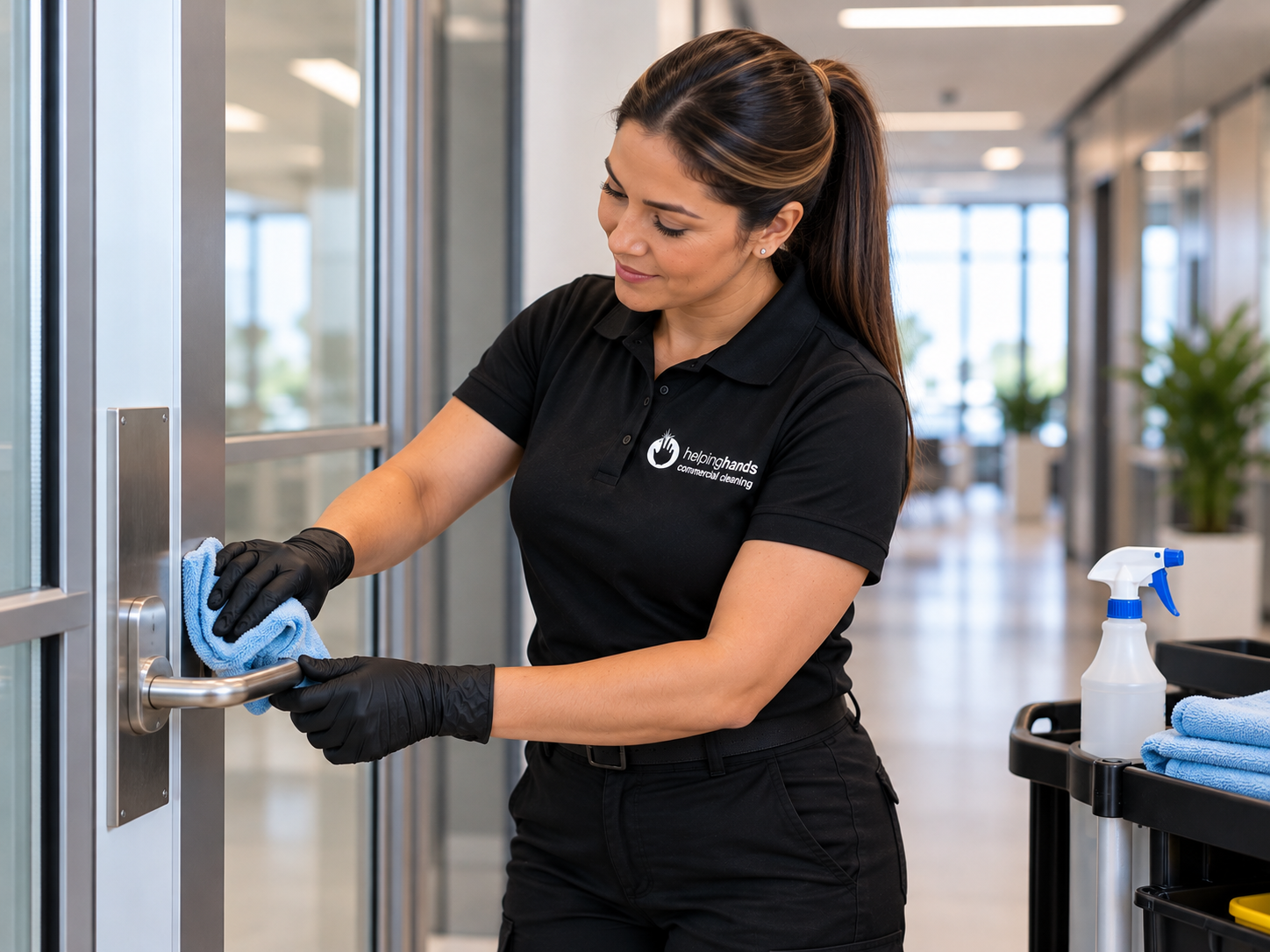
- High-Touch Surface Disinfection : Regularly sanitize frequently touched surfaces (doorknobs, switches, desks).
Consistent implementation lowers healthcare-associated infection rates and protects everyone in the facility.
Which Certifications Validate Cleaning Quality and Compliance?
Industry credentials verify that a cleaning provider follows accepted best practices and regulatory expectations.
- GBAC STAR Certification : Confirms adherence to cleaning and disinfection protocols.
- ISSA Membership : Indicates alignment with global industry standards.
- BSCAI Membership : Supports contractor training and operational best practices.
These certifications help healthcare facilities evaluate and trust a cleaning partner’s capabilities.
How Does Helping Hands Deliver Specialized Medical Office Cleaning Services?
Helping Hands Commercial Cleaning provides tailored cleaning for clinical environments using inspection-driven quality control and trained personnel to meet healthcare expectations.
- Inspection-Driven Quality Assurance : Scheduled and ad-hoc inspections maintain standards and identify issues quickly.
- Trained and Background-Checked Employees : Staff receive infection-control training and screening for reliability.
- Health-First Cleaning Standards : The company prioritizes hospital-grade products and eco-conscious choices when appropriate.
This model supports consistent, compliant cleaning across medical office types.
What Are the Key Features of Our Healthcare Janitorial Programs?
Program features focus on compliance, effective disinfection, and minimal disruption to clinical operations.
- Healthcare-Compliant Cleaning Protocols : Procedures follow current regulations and best practices.
- Use of Hospital-Grade Disinfectants : Targets common healthcare pathogens for reliable results.
- Flexible Scheduling Options : Services can occur during off-peak or after hours to reduce patient disruption.
These elements help facilities maintain a safe environment for patients and staff while minimizing operational impact.
How Do We Ensure Accountability and Client Satisfaction?
Helping Hands emphasizes accountability through routine checks, targeted cleaning, and prompt communication.
- Routine Inspections : Verify adherence to cleaning protocols and identify corrective steps.
- High-Touch Surface Disinfection : Ensures priority areas receive frequent attention.
- Same-Day Communication : Fast responses to client concerns and service requests.
These practices support reliable service delivery and strong client relationships.
Which Chicagoland Areas Are Served by Our Healthcare Cleaning Experts?
Helping Hands Commercial Cleaning serves many parts of the Chicagoland region, including:
- DuPage County
- Cook County
- Kane County
- Will County
- Lake County
Local coverage enables consistent, timely service tailored to regional facility needs.
What Counties and Facilities Are Included in Our Service Area?
The service area covers DuPage, Cook, Kane, Will, and Lake counties and includes hospitals, clinics, and private practices. This allows Helping Hands to adapt cleaning plans for diverse facility types.
How Do Localized Services Benefit Medical Office Operations?
Local providers offer responsiveness and regional expertise that help medical offices remain compliant and operationally efficient.
- Efficiency Improvements : Faster response times reduce downtime.
- Compliance with Health Regulations : Local knowledge supports meeting regional requirements.
- Successful Implementations : Tailored solutions address each facility’s needs.
These advantages support smoother day-to-day operations and better patient care.
What Are Common Questions About Healthcare Janitorial Services in Chicago?
Facility managers commonly ask about cleaning frequency, vendor selection criteria, and service costs.
- How often should medical offices be professionally cleaned?
- What should facility managers look for when choosing a cleaning company?
- What are the costs associated with healthcare cleaning services?
Clear answers help managers compare options and set expectations with providers.
How Often Should Medical Offices Be Professionally Cleaned?
Frequency depends on patient volume and services: high-traffic clinics often need daily visits; lower-traffic practices may use weekly or bi-weekly schedules. Regular professional cleaning preserves hygiene and safety.
What Should Facility Managers Look for When Choosing a Cleaning Company?
Key considerations include:
- Experience and Reputation : Proven healthcare cleaning experience.
- Quality Assurance Programs : Documented inspections and corrective processes.
- Compliance with Healthcare Standards : Certifications and adherence to regulations.
Prioritizing these criteria helps select a partner that supports safety and operational needs.
Frequently Asked Questions
What types of cleaning products are used in medical office janitorial services?
Providers use EPA-registered, hospital-grade disinfectants to address a broad range of pathogens and follow CDC guidance. Eco-friendly options may be applied where safe and effective to reduce environmental impact.
How can medical offices ensure compliance with health regulations?
Engage providers familiar with local and national standards, require staff training in infection-control, and verify certifications such as GBAC STAR. Regular audits and inspections confirm ongoing compliance.
What role does staff training play in healthcare cleaning services?
Training ensures correct product use, proper techniques to prevent cross-contamination, and attention to high-touch areas. Well-trained teams maintain consistent cleaning quality and regulatory alignment.
What are the benefits of using a specialized cleaning service for medical offices?
Specialized services bring clinical cleaning expertise, appropriate tools and products, and trained staff who understand healthcare workflows—reducing infection risk and freeing providers to focus on patient care.
How do flexible scheduling options impact medical office cleaning?
Flexible schedules let cleaning occur during off-peak hours or after hours to minimize disruption while enabling rapid responses to urgent needs.
What should facility managers expect from routine inspections of cleaning services?
Inspections assess high-touch cleanliness, correct product use, and adherence to protocols. Feedback drives corrective action and continuous improvement.
How can medical offices measure the effectiveness of their cleaning services?
Use routine inspections, client feedback, compliance audits, and performance metrics (e.g., cleanliness checks of high-touch areas) to monitor service quality and outcomes.
Conclusion
Maintaining a clean, sanitized medical office is vital for patient safety and operational efficiency. Following healthcare cleaning standards, using certified providers, and implementing inspection-driven programs reduce infection risks and support high-quality care. Partnering with experienced providers like Helping Hands Commercial Cleaning helps facilities stay compliant and maintain tailored cleaning solutions for diverse clinical needs.