How Aurora and Elgin Manufacturing Plants Manage High-Frequency Cleaning Without Disrupting Operations
By Gosia Baran, Helping Hands Commercial Cleaning
Keep Your Facility Clean, Safe, and Inspection-Ready
Get professional cleaning services tailored to your building.
In the fast-paced environment of manufacturing, maintaining cleanliness is crucial for operational efficiency and employee health. High-frequency cleaning is a strategy that many manufacturing plants in Aurora and Elgin are adopting to ensure a safe and productive workspace. This article explores the strategies and technologies these plants implement to manage cleaning without disrupting their operations. Readers will learn about the best practices for scheduling cleaning, maintaining health and safety compliance, and minimizing disruption during cleaning operations. By understanding these methods, facility managers can enhance productivity while ensuring a clean and safe environment for their workforce.
Strategies Used
Manufacturing plants in Aurora and Elgin employ various strategies to effectively manage high-frequency cleaning. Customized cleaning plans are essential, allowing facilities to tailor their cleaning schedules based on specific operational needs. Flexible scheduling is another critical component, enabling cleaning teams to work during off-peak hours or in coordination with shift changes. Continuous cleaning methodologies, which involve regular touchpoint sanitization throughout the day, help maintain cleanliness without significant downtime.
Technologies Implemented
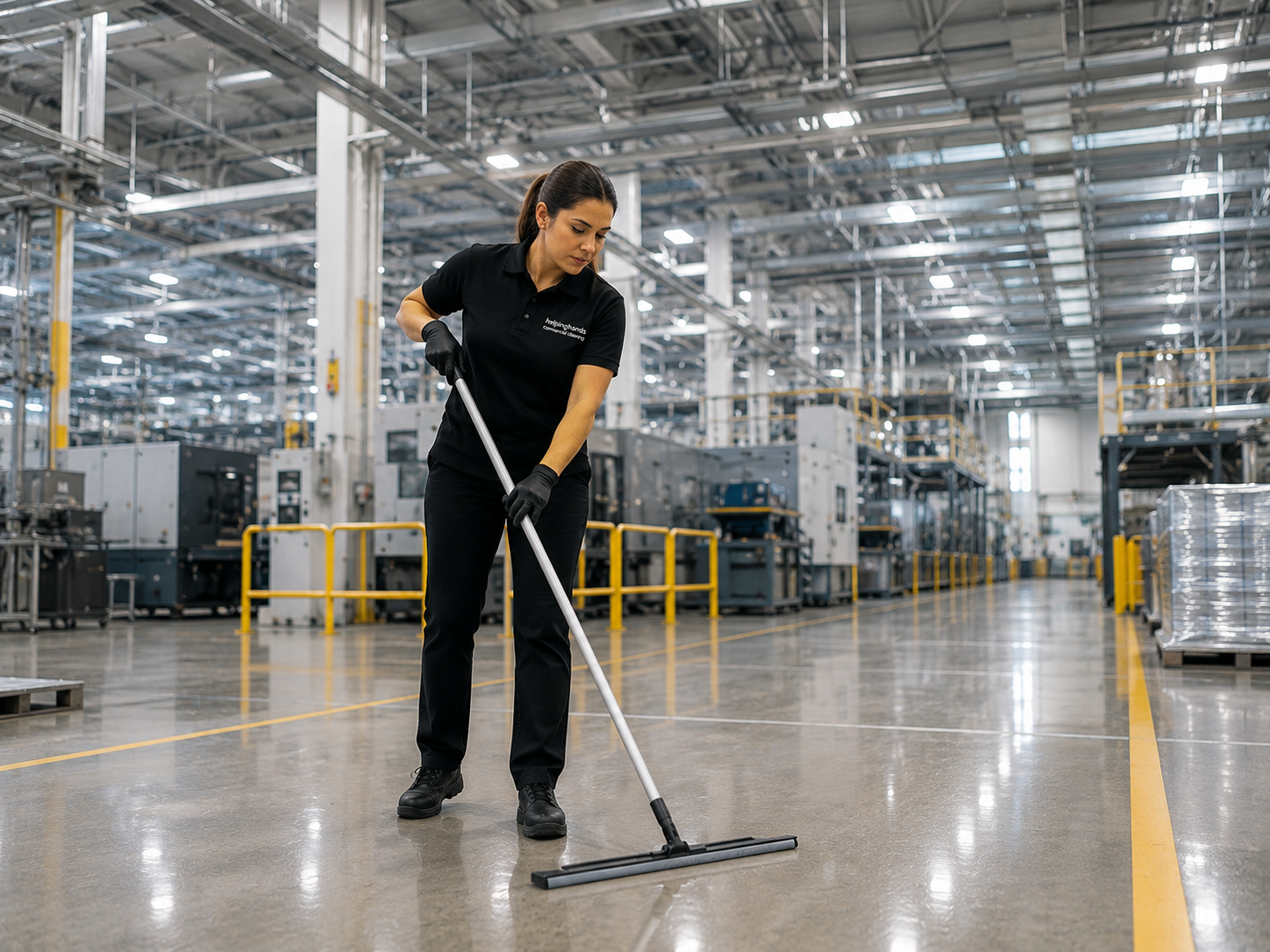
The integration of advanced technologies plays a vital role in the effectiveness of high-frequency cleaning in manufacturing settings. Commercial-grade equipment, such as automated scrubbers and high-efficiency particulate air (HEPA) vacuums, ensures thorough cleaning while minimizing labor costs. Health-focused cleaning protocols, which utilize eco-friendly and non-toxic cleaning agents, are increasingly adopted to protect both employees and the environment. Additionally, monitoring and reporting technologies allow facility managers to track cleaning effectiveness and compliance with health standards.
Impact on Overall Productivity
High-frequency cleaning significantly impacts productivity in manufacturing plants. By reducing health risks associated with unclean environments, plants can lower absenteeism and enhance employee morale. Improved operational efficiency is another benefit, as clean facilities often lead to smoother workflows and fewer disruptions. The following table illustrates the relationship between cleaning frequency and productivity metrics:
| Cleaning Frequency | Health Risks | Employee Morale | Operational Efficiency |
|---|---|---|---|
| Daily | Low | High | High |
| Weekly | Moderate | Moderate | Moderate |
| Monthly | High | Low | Low |
This data highlights the importance of maintaining a high-frequency cleaning schedule to support overall productivity.
Local commercial cleaning services specialize in delivering high-frequency, health-focused cleaning services tailored for manufacturing plants in Aurora, Elgin, and surrounding counties. Their expertise ensures that facilities can maintain cleanliness without compromising operational efficiency. For comprehensive solutions, consider exploring commercial cleaning services tailored for manufacturing needs.
What Are the Best Practices for Scheduling High-Frequency Industrial Cleaning in Aurora and Elgin?
Effective scheduling is crucial for minimizing disruption during high-frequency cleaning. Best practices include creating tailored cleaning schedules that align with production demands. Implementing after-hours and weekend cleaning can also help avoid interference with daily operations. Continuous monitoring and adjustments to cleaning schedules based on real-time operational needs ensure that cleaning efforts remain effective and non-disruptive.
How Do Manufacturing Plants Optimize Cleaning Frequency to Minimize Operational Impact?
Manufacturing plants optimize cleaning frequency by developing customized cleaning schedules that consider peak production times and employee shifts. Coordination with shift changes allows cleaning teams to perform their tasks when the least number of employees are present, thereby minimizing disruption. This strategic approach ensures that cleanliness is maintained without affecting productivity.
Which Scheduling Techniques Ensure Disruption-Free Cleaning Services?
Several scheduling techniques can help ensure disruption-free cleaning services. After-hours cleaning options allow for thorough cleaning without impacting daily operations. Area-by-area cleaning strategies enable cleaning teams to focus on specific sections of the facility, reducing the overall impact on workflow. These techniques are essential for maintaining a clean environment while keeping production on track.
How Do Manufacturing Facilities Maintain Health and Safety Compliance During Frequent Cleaning?
Health and safety compliance is paramount in manufacturing facilities, especially during frequent cleaning. Integrating safety compliance protocols into cleaning practices ensures that all cleaning activities meet established health standards. Environmental Health and Safety (EHS) compliant cleaning methods are essential for protecting both employees and the facility.
What Health Standards Apply to High-Frequency Cleaning in Industrial Plants?
High-frequency cleaning in industrial plants must adhere to various health standards. The use of compliant cleaning agents is critical, as these products must meet safety regulations while effectively sanitizing surfaces. Scheduling cleaning during non-peak hours further supports compliance by minimizing exposure to cleaning chemicals for employees.
How Are Compliance Checklists and Certifications Integrated into Cleaning Protocols?
Compliance checklists and certifications are integral to maintaining high standards in cleaning protocols. Regular training for cleaning staff ensures they are aware of the latest health regulations and best practices. Routine inspections help verify that cleaning procedures are followed correctly, reinforcing a culture of safety and compliance within the facility.
What Strategies Do Aurora and Elgin Plants Use to Mitigate Disruption During Cleaning Operations?
To mitigate disruption during cleaning operations, Aurora and Elgin plants employ several strategies. Scheduling cleaning during low-demand periods allows for thorough cleaning without affecting production. Flexible cleaning options, such as on-demand cleaning services, enable facilities to respond quickly to specific needs without compromising overall operations. For specialized janitorial tasks, janitorial services are often leveraged to maintain facility standards.
How Do Porter Cleaning Services Support Continuous Facility Maintenance?
Porter cleaning services play a crucial role in supporting continuous facility maintenance. These services provide ongoing cleaning coverage throughout the day, ensuring that high-traffic areas remain clean and safe. Health-focused protocols employed by porter services help maintain a hygienic environment, contributing to overall employee well-being. These porter cleaning services are vital for maintaining pristine conditions.
What Operational Techniques Reduce Downtime During Janitorial Services?
Operational techniques that reduce downtime during janitorial services include employing direct-hire trained employees who are familiar with the facility’s layout and cleaning needs. Integration with production schedules allows cleaning teams to work efficiently without interfering with manufacturing processes. These techniques are essential for maintaining productivity while ensuring a clean workspace.
What Localized Case Studies Demonstrate Effective High-Frequency Cleaning in Aurora and Elgin Manufacturing Plants?
Localized case studies provide valuable insights into the effectiveness of high-frequency cleaning practices in Aurora and Elgin manufacturing plants. These studies often highlight significant reductions in employee absences and increases in operational efficiency as a result of implementing robust cleaning protocols.
Which Metrics Highlight Success in Disruption-Free Cleaning Programs?
Metrics that demonstrate success in disruption-free cleaning programs include reductions in employee absences and compliance with safety standards. Tracking these metrics allows facility managers to assess the effectiveness of their cleaning strategies and make necessary adjustments to improve outcomes.
How Do Customized Cleaning Schedules Align with Manufacturing Operations?
Customized cleaning schedules align with manufacturing operations by considering production demands and employee availability. Flexible scheduling allows cleaning teams to adapt to changing operational needs, ensuring that cleanliness is maintained without disrupting workflows. This alignment is crucial for fostering a productive and safe working environment. If you’re looking to understand more about the companies providing these services, exploring their about us pages can offer insights into their experience and commitment.