Understanding Industrial Facility Cleaning Services
What does industrial facility cleaning actually include for large warehouses and manufacturing plants in Chicagoland? Industrial facility cleaning for large warehouses and manufacturing plants in Chicagoland includes high dusting of rafters, beams, and overhead equipment to prevent dust accumulation and fire hazards, floor scrubbing and maintenance of epoxy or concrete production floors, restroom and breakroom sanitation, loading dock cleaning, office area janitorial, and disposal of industrial debris. Programs are scheduled around active production shifts and customized to each facility’s layout, safety protocols, and operational hours.
Keep Your Facility Clean, Safe, and Inspection-Ready
Get professional cleaning services tailored to your building.
High Dusting: Rafters, Beams, and Overhead Equipment
Active warehouse and manufacturing facilities generate airborne particulate continuously. Dust settles on overhead beams, rafters, ductwork, light fixtures, the tops of racking systems, and exposed machinery housings. Left unaddressed, that accumulation creates three distinct problems: fire hazard from combustible particulate buildup, product contamination in facilities handling food-adjacent or pharmaceutical-adjacent materials, and eventual migration back down to the production floor and into worker breathing zones.
High dusting in an industrial environment is not the same as dusting an office ceiling fan. It requires crews trained for elevated-access work in active facilities, equipment capable of reaching racking systems and structural overhead elements safely, and a documented rotation schedule that keeps accumulation from reaching hazardous levels between service visits. Facilities in Chicagoland that defer high dusting are not managing a cosmetic issue. They are managing a growing safety and compliance liability.
Floor Scrubbing and Industrial Floor Maintenance
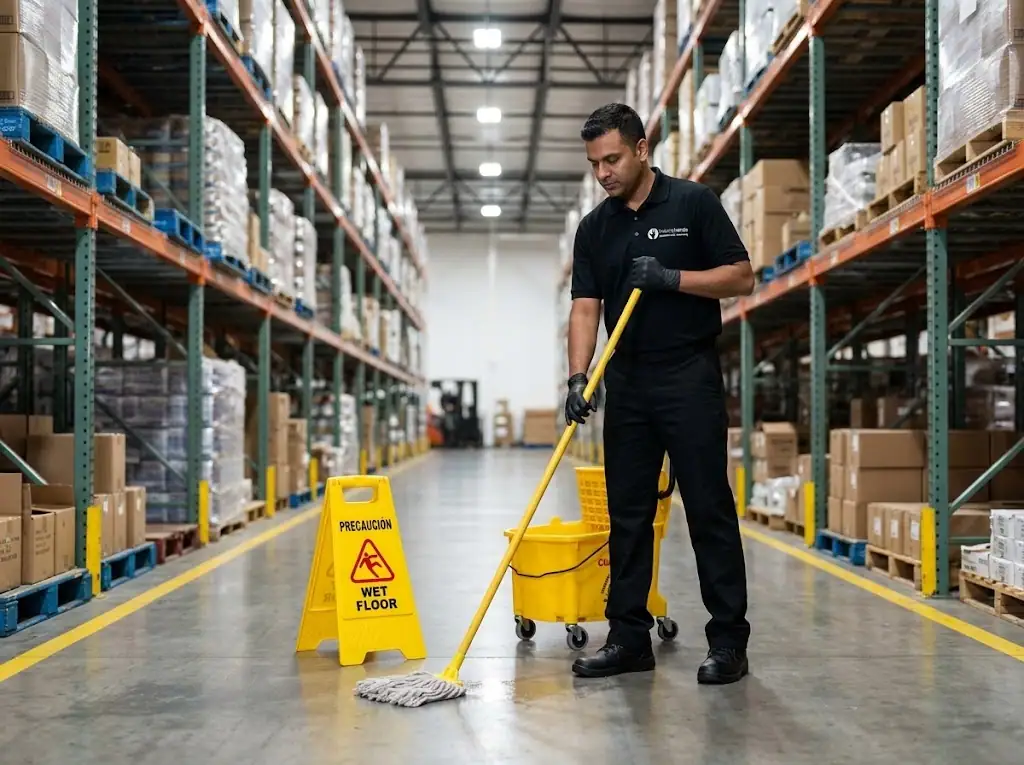
Production floors in warehouses and manufacturing plants are among the most demanding surfaces in any commercial environment. Forklift traffic lays down tire marks and grease. Pallet jack lanes accumulate debris from packaging and product movement. Metal shavings, lubricants, and industrial residue build up in ways that standard mopping cannot address.
Industrial floor scrubbing programs use ride-on or walk-behind scrubbers sized to the square footage and traffic patterns of each specific facility. The cleaning approach varies by floor material: sealed concrete, epoxy-coated surfaces, and bare industrial floors each respond differently to cleaning equipment and chemicals. Frequency is determined by shift count and soil load. A single-shift facility with moderate traffic needs a different program than a three-shift manufacturing plant running continuous production.
Deferred floor maintenance in an industrial environment creates three compounding problems: slip-and-fall hazards in high-traffic aisles, accelerated surface degradation that shortens floor lifespan and increases replacement costs, and compliance exposure during OSHA walkthroughs focused on walking-working surface conditions.
Restrooms and Breakrooms in Industrial Environments
Restroom and breakroom facilities in large warehouses and manufacturing plants serve workforces that are larger, working harder physically, and moving through these spaces more frequently than a typical office building. The sanitation requirements reflect that reality.
Industrial restrooms require more frequent service intervals, higher-grade disinfection protocols, and supply restocking schedules calibrated to actual workforce usage, not standard office assumptions. Breakrooms in active manufacturing facilities accumulate food debris, packaging waste, and surface contamination at a rate that demands daily attention at minimum.
Facilities running multiple shifts require restroom and breakroom service that spans the operational day, not a single nightly visit. A cleaning program built around one shift’s needs will fall short for the other two.
Loading Docks and Entry Points
Loading docks are the highest-traffic, highest-soil-load zones in any warehouse facility. Outdoor debris, vehicle exhaust residue, weather-tracked particulate, and product spillage from receiving and shipping operations concentrate at dock doors and staging areas. These zones are also among the most visible to vendors, carriers, and auditors entering the facility.
Industrial cleaning programs address loading docks as a distinct zone with their own service frequency and scope. Dock plate cleaning, door seal maintenance areas, and staging floor scrubbing require equipment and scheduling separate from interior production floor programs. Facilities that include dock cleaning in their janitorial scope avoid the accumulation that creates slip hazards at entry points and leaves a poor first impression for every vendor and visitor who enters through the back of the building.
Office Areas Within Industrial Facilities
Most large warehouse and manufacturing facilities include office areas embedded within or adjacent to the production environment. These spaces house operations staff, safety personnel, and administrative teams working in proximity to an industrial setting. Their cleaning needs differ from a standalone corporate office in one important respect: they are adjacent to the dust, particulate, and soil load of the production floor.
Office areas within industrial facilities require more frequent attention to dust accumulation on horizontal surfaces, HVAC vents, and window ledges than a traditional office environment. They also require cleaning crews that understand the safety protocols of the broader facility, including access control, PPE requirements in certain zones, and the operational schedule that governs when and where cleaning can safely occur.
A cleaning program that treats the office area as a separate contract from the industrial space creates coordination gaps and scheduling conflicts. Facilities are best served by a single vendor whose scope covers both environments under one accountable program.
How Cleaning Schedules Are Built Around Production Shifts
The defining characteristic of a specialized industrial cleaning program is that the schedule serves the facility, not the cleaning company’s preferred hours. Warehouses and manufacturing plants in Chicagoland run on production schedules that may include day shifts, evening shifts, overnight shifts, and weekend operations. The cleaning program has to fit around those constraints without disrupting output.
Building a compliant industrial cleaning schedule starts with an on-site walkthrough that maps production zones, shift changes, restricted access windows, and the specific surfaces and equipment that require service. From that walkthrough comes a scope document that assigns cleaning tasks to the windows where they can be safely and effectively completed without interfering with active operations.
Facilities that let a cleaning vendor set the schedule based on their own crew availability end up with a program that works for the vendor and creates friction for the facility. A properly scoped industrial program reverses that dynamic: the schedule is built around the production calendar, and the cleaning crew is trained to work within it.
Helping Hands Commercial Cleaning: Industrial Programs Across Chicagoland Since 2001
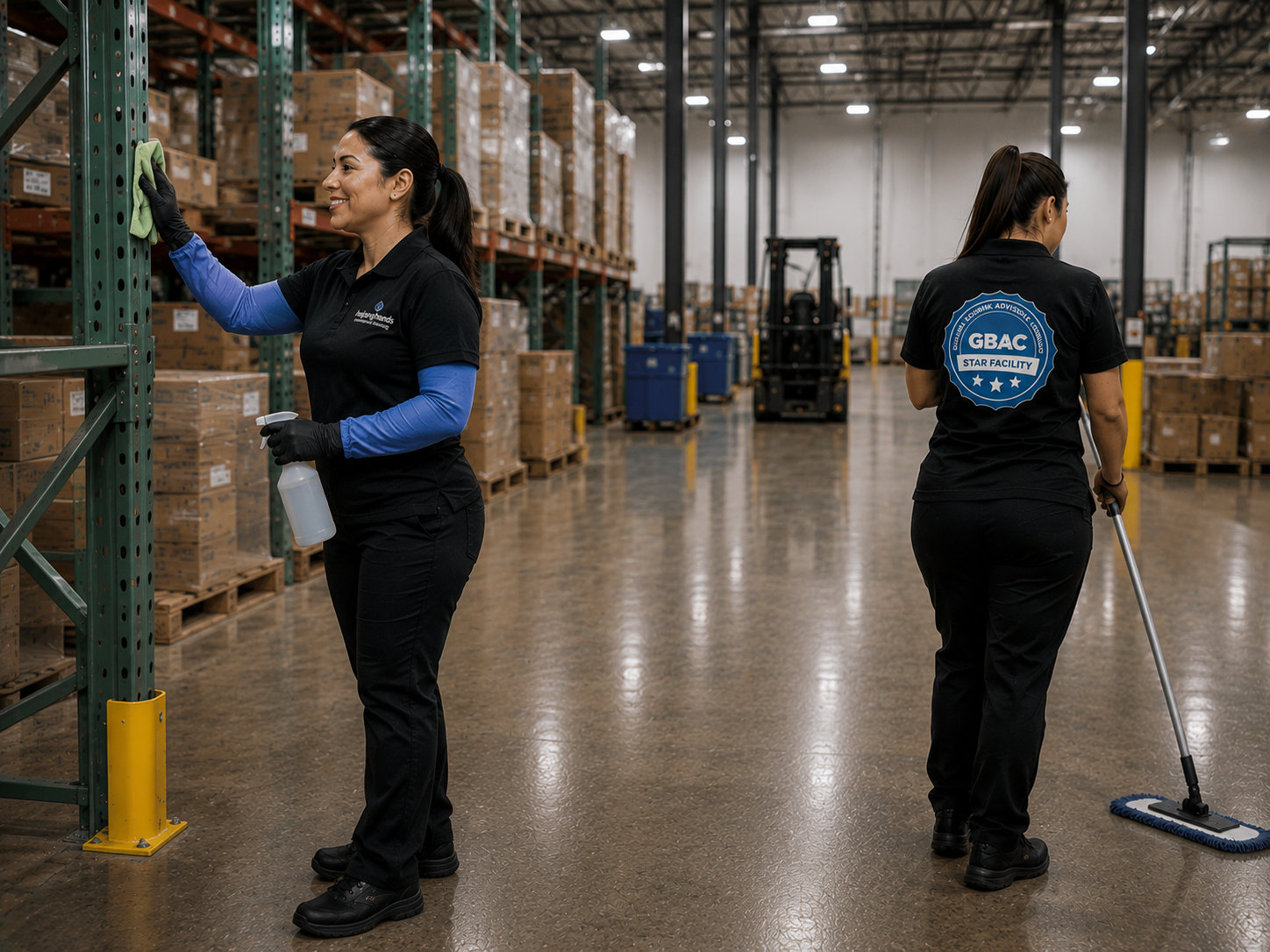
Helping Hands Commercial Cleaning is a woman-owned commercial janitorial company headquartered in Elmhurst, Illinois, serving DuPage, Cook, Kane, Will, and Lake Counties since 2001. The company employs direct-hire employees exclusively, holds GBAC certification for infection-control protocols, and conducts weekly supervisor inspections with photo documentation on every account.
Every industrial cleaning program begins with an on-site walkthrough to assess square footage, shift structure, soil load, compliance requirements, and production schedule. The result is a scoped proposal built for that specific facility, not a generic rate applied across accounts.
To schedule a walkthrough for your warehouse or manufacturing facility, contact Helping Hands Commercial Cleaning at Call (630) 530-8121.