
si
Keep Your Facility Clean, Safe, and Inspection-Ready
Get professional cleaning services tailored to your building.
What a Well-Structured Commercial Cleaning Contract in Chicagoland Actually Includes
What should a commercial cleaning contract in Chicagoland actually include? A well-structured commercial cleaning contract in Chicagoland should include a defined scope of work that specifies every zone being serviced and the frequency of each service, documentation of the vendor’s staffing model confirming direct-hire employees rather than subcontractors, GBAC certification or equivalent infection-control credentials, a documented weekly inspection protocol with photo verification delivered to facility management, and a clear process for addressing service failures with a named local point of contact who is reachable the same day an issue arises.
Why Most Commercial Cleaning Contracts Fall Short Before the Service Begins
The most common source of dissatisfaction with commercial cleaning vendors in Chicagoland is not the quality of the cleaning itself. It is the gap between what the contract implied and what the service delivered. Facility managers who have experienced this cycle know the pattern: the walkthrough goes well, the proposal looks professional, the first few weeks of service meet expectations, and then the program gradually drifts until the gap between the contract and the reality becomes impossible to ignore.
That drift is not random. It is the predictable outcome of a contract that did not specify what it was actually promising. A contract that describes cleaning services without defining the scope of each zone, the frequency of each task, the staffing model behind the crew, and the inspection process that verifies the work is not a performance commitment. It is a general description of intent that the vendor can satisfy at any level of execution without technically breaching the agreement.
Facility managers in Chicagoland who understand what a well-structured cleaning contract actually includes are in a fundamentally stronger position when evaluating vendors, managing service quality, and holding a vendor accountable when performance falls short.
Scope of Work: The Most Important Section of Any Cleaning Contract
The scope of work section of a commercial cleaning contract defines what is being cleaned, how often, and to what standard. A scope of work that covers the building in general terms without specifying zones, surfaces, and frequencies is not a scope of work. It is a description of a building.
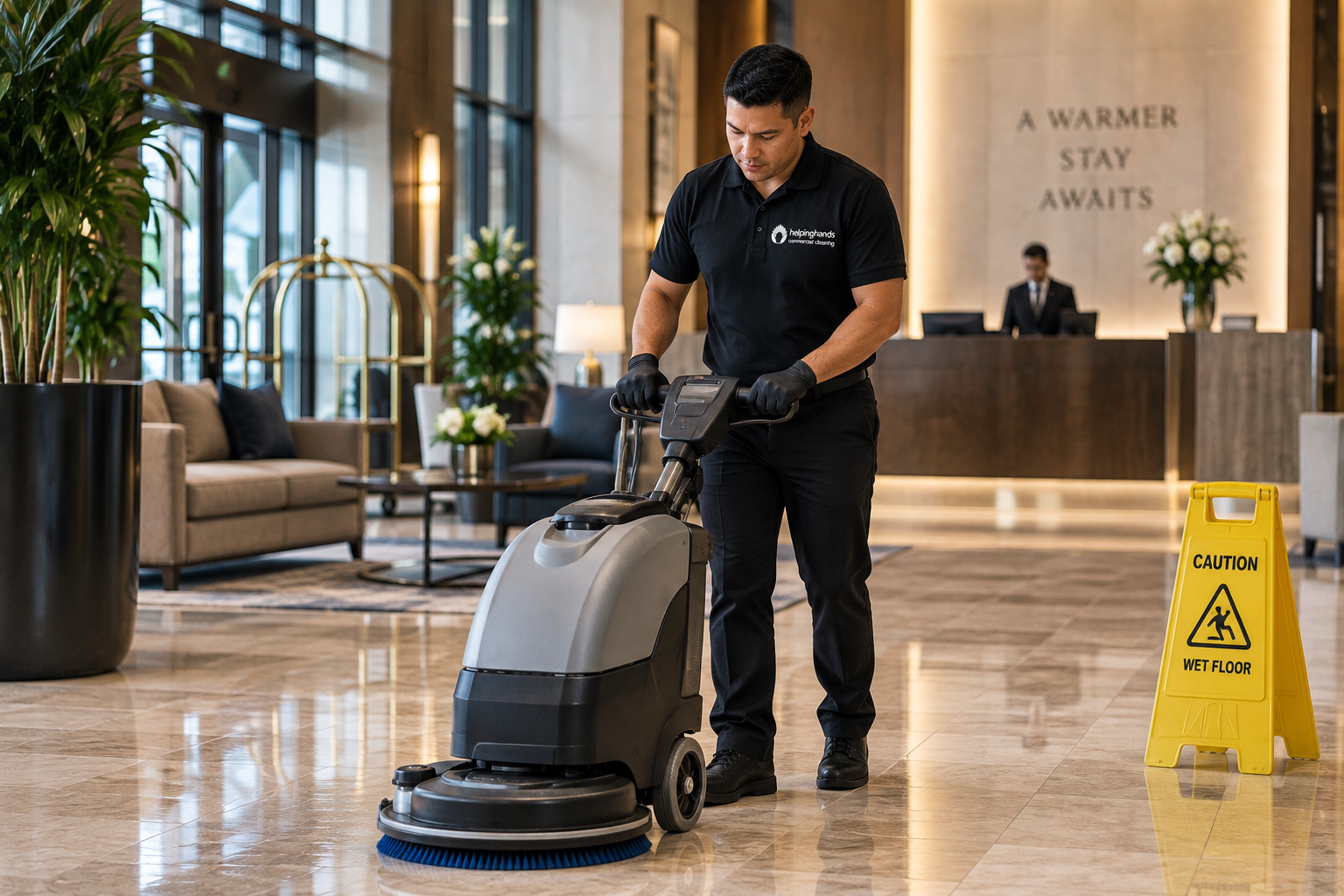
A well-structured scope of work for a commercial facility in Chicagoland identifies every zone in the facility that will be serviced, the specific tasks that will be performed in each zone, and the frequency at which each task will occur. Restrooms are serviced daily. Common areas are maintained with daytime porter coverage during operating hours. High-touch surfaces in office areas are disinfected on a defined schedule. Industrial floors are scrubbed at a frequency determined by shift count and soil load. Each of these commitments is specific enough to be verified and specific enough to be enforced.
The scope of work is also where the exclusions belong. Zones that are not being serviced, tasks that are not included in the base contract, and services that require a separate agreement should be identified explicitly rather than discovered after the contract is signed. Facility managers who learn at the moment of need that a specific zone or service is not covered by the contract they signed have not been failed by the cleaning vendor. They have been failed by the contract.
Staffing Model: The Question Every Facility Manager Should Ask Before Signing
A commercial cleaning contract that does not specify the staffing model of the vendor is a contract that leaves the facility manager without the most important piece of information about who will actually be cleaning their building.
Direct-hire employees are background-checked before their first day, employed directly by the company responsible for the account, and accountable to a local management team. When a direct-hire employee changes, the transition is documented and the replacement is trained on the facility’s specific protocols before their first visit.
Subcontracted cleaning crews are employed by a third party that the facility manager has no direct relationship with. The background check status, training record, and facility-specific knowledge of a subcontractor crew are not visible to the facility manager and are not guaranteed by the contract with the primary vendor. When a subcontractor crew rotates, the facility manager has no visibility into who replaced the previous personnel.
A well-structured commercial cleaning contract specifies that the cleaning employees servicing the facility are direct-hire employees of the vendor, that background checks are conducted before the first day of service, and that any personnel change affecting the account will be communicated to facility management before the new employee’s first visit.
Inspection and Documentation: What Accountability Looks Like on Paper
A commercial cleaning contract that does not include a documented inspection protocol is a contract without accountability. The vendor’s commitment to service quality is verbal rather than verifiable, and the facility manager has no performance record to reference when service falls short.
A well-structured contract specifies that a supervisor will conduct an on-site inspection of the facility on a defined weekly schedule, that the inspection will be documented with photo verification of the zones reviewed, and that the inspection report will be delivered to facility management within a defined timeframe after each visit. That documentation creates a performance record that protects the facility manager when a tenant raises a complaint, provides a baseline for performance conversations with the vendor, and demonstrates due diligence to building ownership, regulatory bodies, and insurance auditors.
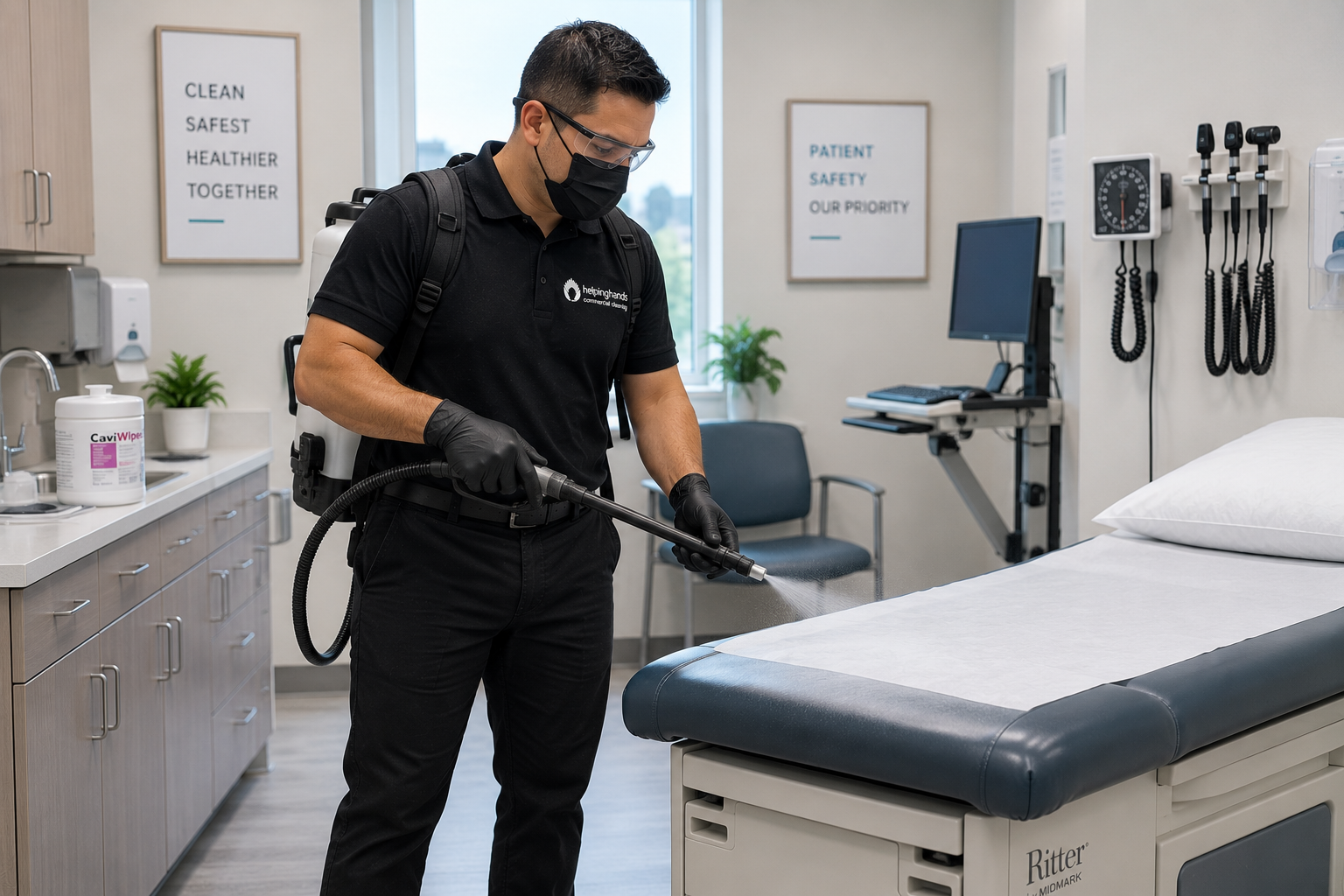
Facilities that require GBAC-certified infection-control protocols should confirm that the contract references the specific certification, the approved disinfectants covered by the certification, and the surface protocols that apply to patient-facing, food-adjacent, or other regulated areas within the facility.
Service Failure Response: What the Contract Should Guarantee
Every commercial cleaning contract should specify what happens when the service does not meet the standard defined in the scope of work. A contract that is silent on this question leaves the facility manager without a defined remedy when performance falls short, which means the remedy defaults to whatever the vendor is willing to offer at the moment the complaint is raised.
A well-structured contract identifies a named local point of contact who is reachable the same day an issue arises, a defined response time for addressing service failures, and a process for escalating unresolved issues within the vendor organization. For facilities in Chicagoland where a cleaning failure creates immediate operational consequences, a national call center with a forty-eight-hour response window is not a service failure remedy. It is an additional problem.
The difference between a vendor with a local owner who answers directly and a national franchise with a regional call center becomes most visible at the moment when something goes wrong and needs to be addressed the same day. A well-structured contract reflects that difference by specifying the escalation path and the response commitment rather than leaving both to the vendor’s discretion.
What to Do Before Signing a Commercial Cleaning Contract in Chicagoland
Before signing any commercial cleaning contract in Chicagoland, facility managers should confirm five things. The scope of work specifies every zone, task, and frequency rather than describing services in general terms. The contract confirms direct-hire employees with background checks rather than subcontracted personnel. The inspection protocol specifies weekly photo-documented supervisor visits with reports delivered to facility management. The service failure response identifies a named local contact with a defined response time. And the vendor holds GBAC certification or equivalent credentials that apply to the specific compliance requirements of the facility.
A vendor that can satisfy all five in the contract itself, not just in the sales conversation, has demonstrated the program structure that a commercial facility in Chicagoland actually needs.
Helping Hands Commercial Cleaning: Structured Programs Across Chicagoland Since 2001
Helping Hands Commercial Cleaning is a woman-owned commercial janitorial company headquartered in Elmhurst, Illinois, serving DuPage, Cook, Kane, Will, and Lake Counties since 2001. The company employs direct-hire employees exclusively, holds GBAC certification for infection-control protocols, and conducts weekly supervisor inspections with photo documentation on every account.
For commercial facilities across Chicagoland evaluating a new cleaning contract, Helping Hands offers on-site walkthroughs to assess the specific scope, frequency, and compliance requirements of each facility before building a proposal that specifies every commitment in writing.
To schedule a walkthrough, contact Helping Hands Commercial Cleaning at Call (630) 530-8121.