Cleaning office buildings well means treating each zone differently: lobbies, elevators, restrooms, tenant suites, stairwells, and loading docks all get dirty in their own way and need their own schedule. Helping Hands Commercial Cleaning cleans office buildings across Chicago and Cook, DuPage, Kane, Will, and Lake counties with trained, background-checked W-2 crews. This guide breaks down what each zone needs, how often, and how to build a plan that keeps tenants happy all year.
Keep Your Facility Clean, Safe, and Inspection-Ready
Get professional cleaning services tailored to your building.
Key Takeaways
Office building cleaning works best when you plan by zone, not by one long task list.
Lobbies, elevators, and restrooms shape tenant opinion more than any other space, so they get the most frequent attention.
Chicago winters change the plan: entrances, lobbies, and garages need daily salt and slush control from November to March.
A recurring program of three to five service days per week, plus scheduled floor care, keeps most office buildings in steady shape.
Why a Zone-by-Zone Plan Works Better for Cleaning Office Buildings
Most office buildings in the Chicago area fall into a few types. There are Loop and River North high-rises with busy lobbies and banks of elevators. There are suburban office parks along the I-88 corridor in Oak Brook, Downers Grove, and Lisle, and along I-90 in Schaumburg. And there are smaller two- to four-story buildings with mixed tenants in nearly every suburb.
In all of them, the same mistake shows up: one general checklist for the whole building. That approach misses how differently each area is used. A lobby sees hundreds of people a day. A tenant suite might see twenty. A stairwell might be used only during fire drills, until it suddenly becomes everyone’s shortcut.
Planning by zone lets you put effort where it shows and where it protects health and safety. It also makes it easy to check the work, because each zone has clear standards.
Common Areas: Lobby, Entrances, and Corridors
The lobby is your building’s handshake. Tenants and visitors form an opinion in seconds.
What the lobby and entrances need
Glass entry doors and sidelights cleaned of fingerprints
Entrance mats vacuumed and rotated
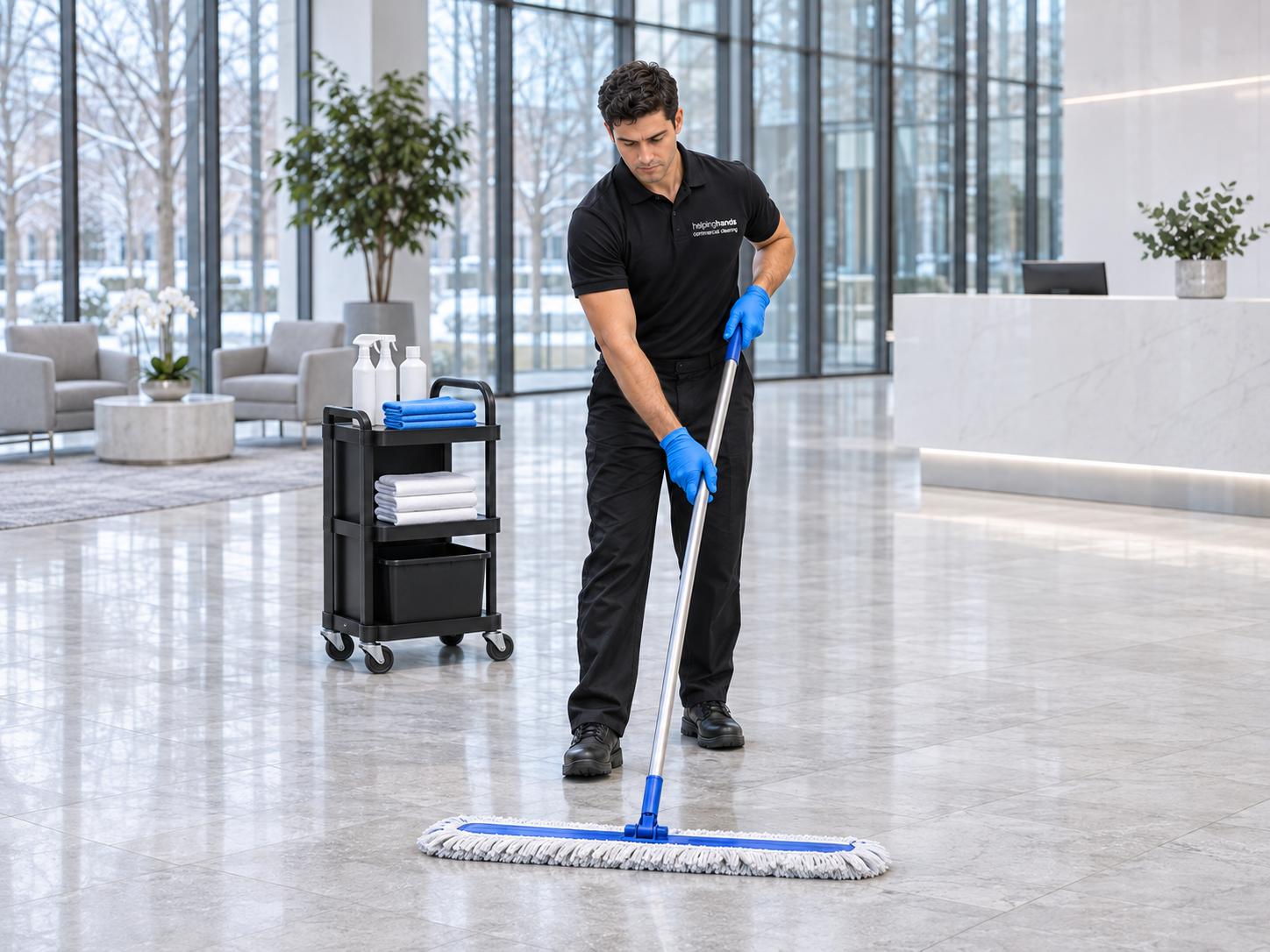
Hard floors dust mopped and damp mopped
Security desk, directory, and seating wiped down
Trash and recycling emptied
Plants and decor dusted
Winter in Chicago
From November through March, salt and slush can ruin lobby floors fast. Add extra matting, clean entrances every service day, and schedule periodic scrubbing to remove salt film. For a deeper look, read our guide to winter commercial cleaning for large Chicago facilities.
Corridors
Hallways on tenant floors need vacuuming, spot cleaning of walls and doors, and attention to drinking fountains and trash cans. These are often skipped when crews run short on time, so they should be on the inspection list.
Elevators and Stairwells
Elevators are small, closed, and touched constantly. That makes them a high priority.
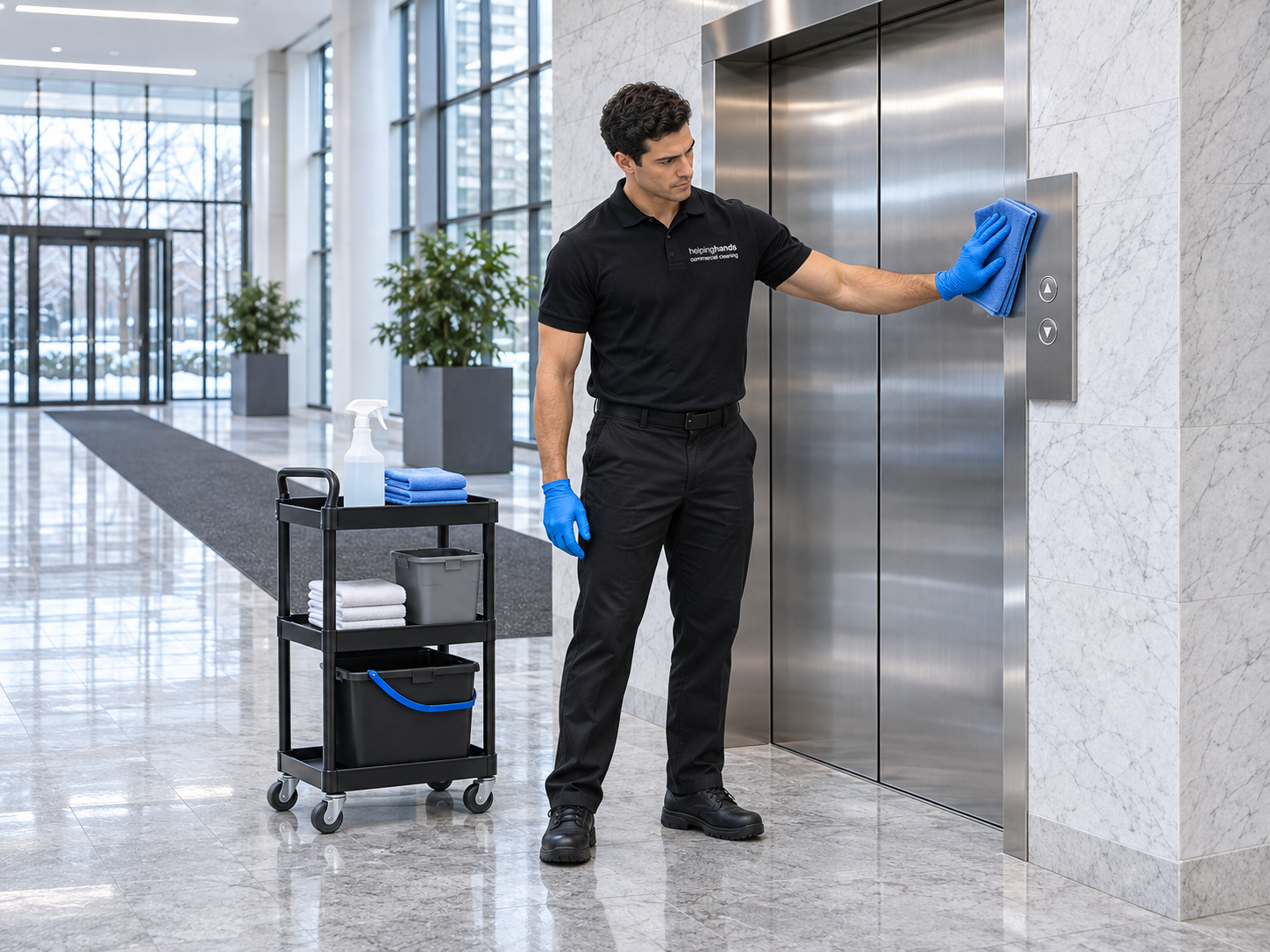
Wipe and disinfect call buttons, panels, and handrails every service day.
Clean stainless steel walls and doors with the right polish to avoid streaks.
Vacuum or mop cab floors, and clean door tracks so grit does not build up.
In buildings with a freight elevator, clean it after move-ins and deliveries.
Stairwells are easy to forget. Sweep and mop them on a set schedule, wipe rails, and check for trash or spills. Clean stairwells also matter for safety during drills and emergencies.
Managing an office building and want a plan by zone? Request a free, no-obligation walkthrough and get a custom cleaning plan within 24 hours. Get a quote or call (630) 530-8121.
Restrooms: The Zone Tenants Notice Most
If a restroom is dirty or out of paper, tenants will tell you. Restrooms need a full clean every service day, not a quick wipe.
A strong restroom routine includes:
Cleaning and disinfecting toilets, urinals, sinks, and counters
Cleaning mirrors and partitions
Restocking soap, paper towels, tissue, and seat covers
Mopping floors with a disinfectant, including corners and behind fixtures
Checking for leaks or broken fixtures and reporting them
Our article on commercial restroom cleaning standards covers this zone in more detail. In busy buildings, a day porter can check restrooms during working hours. Learn more about day porter services in Chicagoland.
Tenant Suites and Private Offices
Tenant suites are where the lease lives. Each tenant may have different hours, rules, and expectations, so the scope should be clear for every suite.
Task | Typical frequency |
|---|---|
Empty trash and recycling | Every service day |
Vacuum traffic lanes and open areas | Every service day |
Full vacuum, including under desks | One to two times per week |
Dust clear desk surfaces, ledges, and sills | Weekly |
Wipe door handles, light switches, and shared phones | Every service day |
Clean break rooms and kitchenettes | Every service day |
Clean interior glass and conference room tables | Every service day |
Carpet extraction | Scheduled periodic service |
In multi-tenant buildings, keep a simple log of special requests by suite. That way, crews know which tenant wants desks left untouched and which one wants the conference room reset every night. Our guide to multi-tenant office building cleaning for property managers goes deeper on this.
Back-of-House: Loading Docks, Garages, and Mechanical Spaces
Back-of-house areas rarely get compliments, but they affect the whole building. Dirt from the loading dock and the garage gets tracked into lobbies and elevators.
Loading docks: Sweep, remove debris, and keep the path to the freight elevator clear.
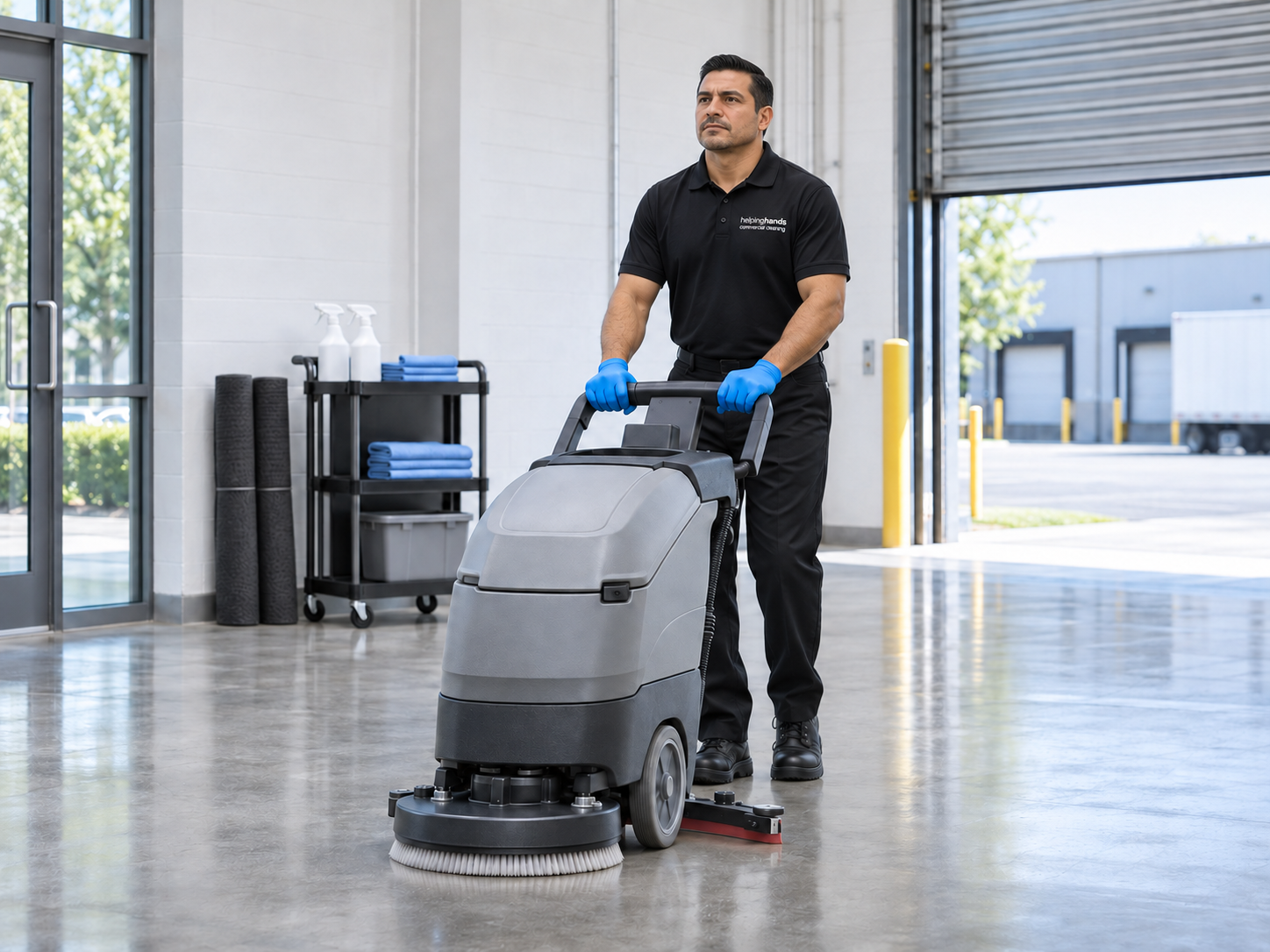
Parking garages and garage vestibules: Remove salt and grit, empty trash, and wipe elevator lobbies.
Trash and recycling rooms: Keep floors clean and containers organized to control odors and pests.
Janitorial closets: Keep them neat and stocked. A messy closet often means a rushed crew.
How Often Should an Office Building Be Cleaned?
The answer depends on how many people use the building and how many days it is busy. Here is a simple way to think about frequency for commercial building cleaning:
Zone | Recommended frequency |
|---|---|
Lobby and entrances | Every service day, daily in winter |
Elevators | Every service day |
Restrooms | Every service day, plus daytime checks in busy buildings |
Tenant suites | Three to five times per week |
Stairwells | Weekly, plus spot checks |
Hard floor scrubbing and recoating | Monthly or quarterly |
Carpet extraction | Quarterly or twice a year |
Helping Hands Commercial Cleaning focuses on recurring programs of three to five service days per week, which fits most office buildings. For more detail, read how often a corporate office should be cleaned.
Why Property Managers Choose Helping Hands Commercial Cleaning
Helping Hands Commercial Cleaning has cleaned Chicagoland facilities since 2001 from our headquarters at 675 St Charles Rd in Elmhurst. Here is what our office building cleaning services bring to your property:
More than 120 W-2 direct-hire employees. Every crew member is trained and background-checked. We never use subcontractors.
Documented weekly supervisor inspections. Each zone is checked and recorded, so you can see the work, not just hear about it.
Recognized standards. We are a GBAC STAR Facility, an ISSA member, and a BSCAI verified member, and we partner with Cleaning for a Reason.
Local membership. We belong to the Elmhurst Chamber of Commerce & Industry, Chamber630, the Bolingbrook Area Chamber of Commerce, and the GOA Regional Business Association.
Full-service coverage. See our office and multi-tenant building cleaning services for the complete scope.
FAQ
What is included in cleaning office buildings?
Cleaning office buildings usually covers lobbies, entrances, corridors, elevators, stairwells, restrooms, tenant suites, break rooms, and back-of-house areas like loading docks. Floor care such as scrubbing, recoating, and carpet extraction is scheduled separately.
How often should commercial buildings be cleaned?
Most office buildings need cleaning three to five days per week, with restrooms, lobbies, and elevators done every service day. Floor care is usually monthly, quarterly, or twice a year.
Does Helping Hands Commercial Cleaning clean multi-tenant office buildings?
Yes. Helping Hands Commercial Cleaning cleans single-tenant and multi-tenant office buildings across Chicago and Cook, DuPage, Kane, Will, and Lake counties.
Should office buildings be cleaned during the day or at night?
Most cleaning happens in the evening or early morning so tenants are not disturbed. Busy buildings often add a day porter to keep restrooms and lobbies fresh during business hours.
How do you keep lobby floors clean in a Chicago winter?
Use more entrance matting, clean entrances every service day, and schedule periodic scrubbing to remove salt film before it damages the finish.
How do I get a quote for office building cleaning services?
Request a free, no-obligation walkthrough online or call (630) 530-8121. You will receive a custom cleaning plan within 24 hours.
Get a Zone-by-Zone Plan for Your Office Building
Tenants notice clean lobbies, fresh restrooms, and spotless elevators. They also notice when those things slip. Helping Hands Commercial Cleaning will walk your building zone by zone and send a custom plan within 24 hours. Request your free walkthrough or call (630) 530-8121.